Validate First, Build Second: Eleni Lialiamou at Zero-To-One Cambridge
by Favour Patrick ·
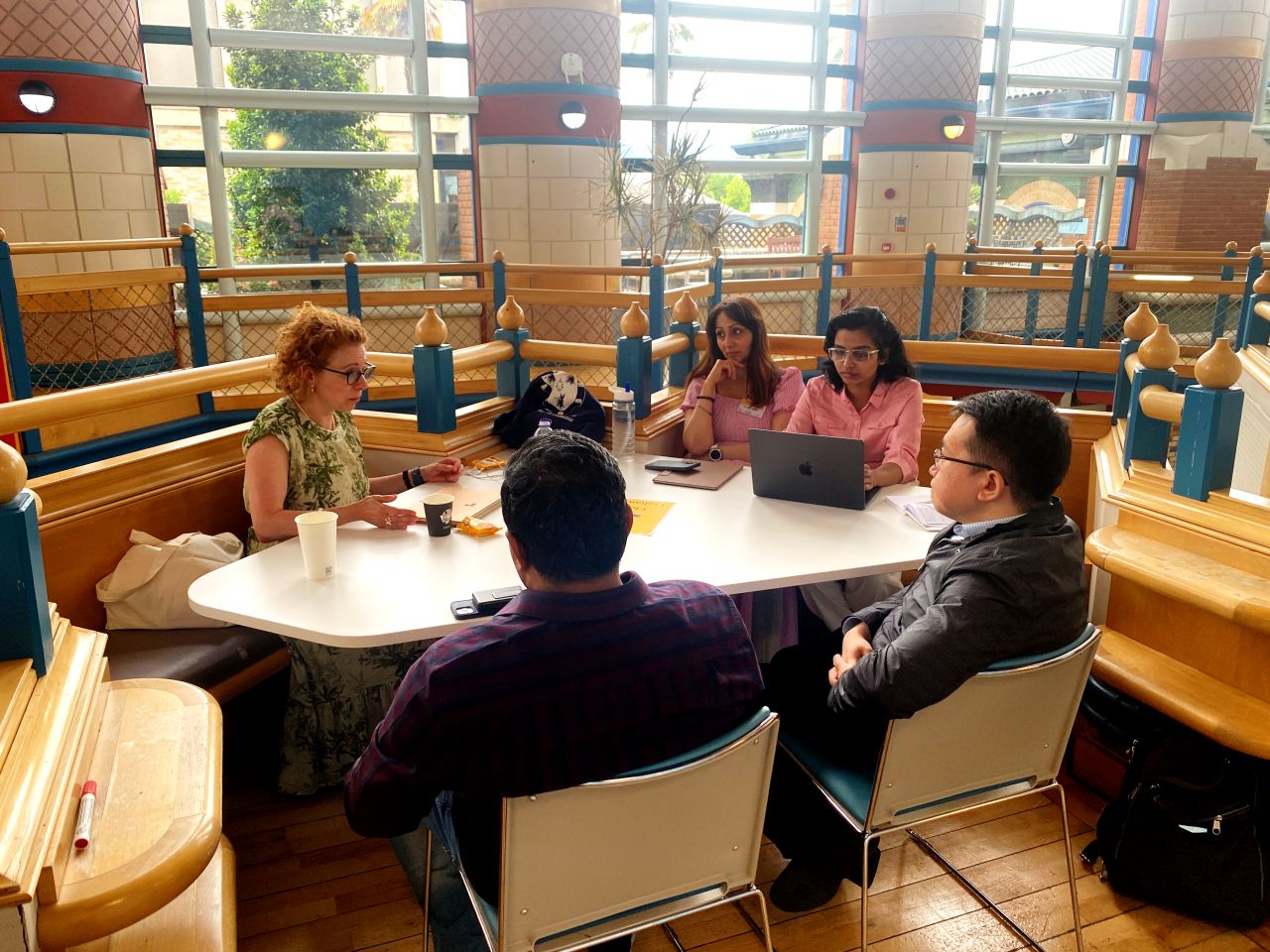
“The mentor sessions were a true highlight. Being challenged by experts across strategy, product development, clinical research, IP, fundraising, and go-to-market strategy pushed us to think deeper, ask better questions, and sharpen our vision.”
Forty-eight hours. Nine teams. One rule: validate the problem before you build the solution.
That was the premise of Zero-To-One Weekend: Digital Health, held at Cambridge Judge Business School in collaboration with King’s E-Lab and Global Education Lab. Eleni Lialiamou joined as a mentor, working with early-stage health tech founders across the session. The weekend was led by Andrew Hatcher and Suyash Bhatt, bringing together founders, researchers, and builders tackling some of the most complex problems in digital health.
What the Weekend Was
Zero-To-One brought together founders, researchers, and builders tackling some of the most complex problems in digital health. Over 48 hours, teams moved from initial ideas through assumption testing, prototype development, and commercial strategy, ending with a final pitch to a panel of judges.
The cohort was technically capable. What the weekend offered was structured pressure: the kind that forces a team to stress-test whether the problem they are solving is the problem that actually needs solving.
Eleni’s role was to help teams sharpen their product strategy and build working prototypes in Lovable, something they could demo rather than simply describe in their pitch.
What the Mentor Sessions Produced
The mentor sessions were described by participants as the highlight of the weekend. Teams were pushed across strategy, product development, clinical research, intellectual property, fundraising, and go-to-market thinking, not to overwhelm them, but to sharpen concepts that needed sharpening before a pitch panel.
One participant noted that being challenged by experts across those disciplines pushed their team to think deeper, ask better questions, and sharpen their vision. What began as a concept left the weekend with a clearer customer focus and stronger value proposition.
That is the work. Not the idea. The pressure applied to it.
What Got Built
Nine teams pitched at the end of the weekend. Two stood out to the judges.
Sana AI took the top award. A digital platform helping people understand what care they need, where to find it, and how urgently to act, aligned to their own culture and language. The team behind it: Tendai Nzonzo, Robyn B., and Phil Clements.
EquiGen took both the first runner-up position and the People's Choice Award, recognised by the Zero-To-One community for its relevance, ambition, and potential impact. Building systems to improve access to genomic diagnostics and tumour sequencing for women with triple-negative breast cancer in sub-Saharan Africa. The team: Yvonne Walburga Joko-Fru, Linda Tang, Amey Kulkarni, Mia Ahed Zakaria, Sydney C., and Henry C. Okonkwo.
The winning team earned a pathway to the Spark Incubator at King's College Cambridge.
Why It Matters
Health tech founders face a specific challenge. The problems are real, and the stakes are high, which makes the instinct to build fast and validate later more costly than in almost any other sector.
Zero-To-One inverts that instinct deliberately. The framework pushes teams to spend the early hours of the weekend not on product but on problem definition, before a single prototype gets built.
For Kimolian.AI, showing up at Cambridge Judge Business School with that audience, founders who think carefully about evidence, clinical reality, and commercial viability, is consistent with where the work has always pointed. AI accelerates building. It does not replace the judgment required to know what is worth building.
That judgment is what the weekend was designed to develop. And from what the teams produced, it worked.
Favour Patrick
Favour Patrick has a background in economics and works in the product and AI space. Through product research, product thinking, content, and AI-enabled workflows, she tells stories about the people building better products and businesses
LinkedIn →