The Crick Innovation Challenge
by Favour Patrick ·
“Translation should be recognised and rewarded as an integral part of research excellence.”
Dr Hermann Hauser KBE FREng FRS
Research is usually judged by how well it answers a question. The Crick Innovation Challenge asks something harder of the people doing that research: what happens once you're given five days to find out what your answer could actually become.
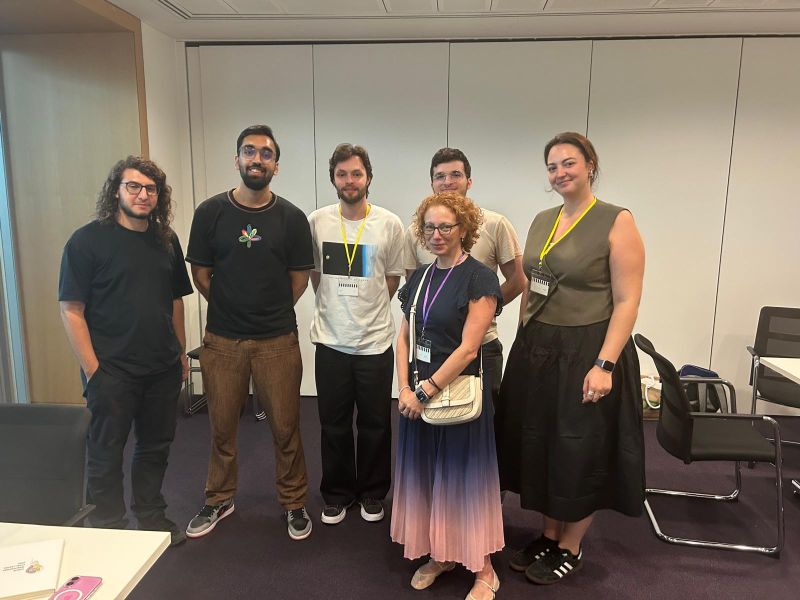
That's the shape of the programme itself, held at the Francis Crick Institute in London, where 80 to 90 early-career researchers, PhD students, postdocs, and early-stage scientists spend the week working in teams, pushing a research idea toward something closer to a venture concept, before pitching it to a panel of judges. Eleni Lialiamou of Kimolian.AI took part as one of several mentors supporting that process, working alongside researchers as they tried to make that leap.
What the Challenge Actually Asks of Researchers
Most of the people in the room had spent years building real depth in one specific field, which is exactly what made the week difficult in a different way. The challenge wasn't testing whether their science held up. It was asking them to hold that expertise up against questions it was never built to answer: who would actually use this, what problem it solves for them specifically, and what it would take to explain the idea to someone standing entirely outside their field.
That's a harder shift than it sounds. Being technically right and being useful to someone else aren't the same skill, and learning the difference between them, under time pressure, alongside people you'd never worked with before, was where most of the week's real work happened.
The Role Mentors Played
A mentor in this setting doesn't own the idea sitting in front of them. Their job is closer to noticing the question a team hasn't gotten around to asking themselves yet, and staying close enough to help them work through an answer rather than handing one over.
That's the role Eleni took on, bringing product and innovation thinking into a room built around scientific research rather than commercial pressure. Most of the researchers she worked alongside had genuine technical depth but very little exposure to what happens once an idea has to survive contact with an actual user, which is precisely the gap mentoring exists to close. One of the teams she spent time with, among several across the week, was behind MakeSense, an idea exploring how sound could be translated into something people could experience visually, built with people living with hearing loss in mind.
What Five Days Actually Produces
By the time the week ended, teams that had started as strangers on day one were standing in front of judges pitching ideas that hadn't existed in that form five days earlier. Not every one of those ideas needs to become a company for the week to have mattered. The real value sat inside the process itself: researchers from different fields forced to collaborate quickly, real scrutiny coming from people outside their specialism, and the discipline of testing an assumption honestly before building anything further on top of it.
Kimolian.AI's Role in the Deep Tech Ecosystem
Mentoring at the Crick Innovation Challenge isn't a one-off appearance for Kimolian.AI. It sits inside a wider position in the UK's deep tech and biotech founding ecosystem, alongside organisations like the Crick, CSEN, and ConceptionX, all of whom keep working with these researchers long after a single week of mentoring ends.

Favour Patrick
Favour Patrick has a background in economics and works in the product and AI space. Through product research, product thinking, content, and AI-enabled workflows, she tells stories about the people building better products and businesses
LinkedIn →